Rwanda and Nigeria Sign Double Taxation Avoidance Agreement to Boost Investment and Economic Cooperation
Rwanda and Nigeria Sign Double Taxation Avoidance Agreement to Boost Investment and Economic Cooperation
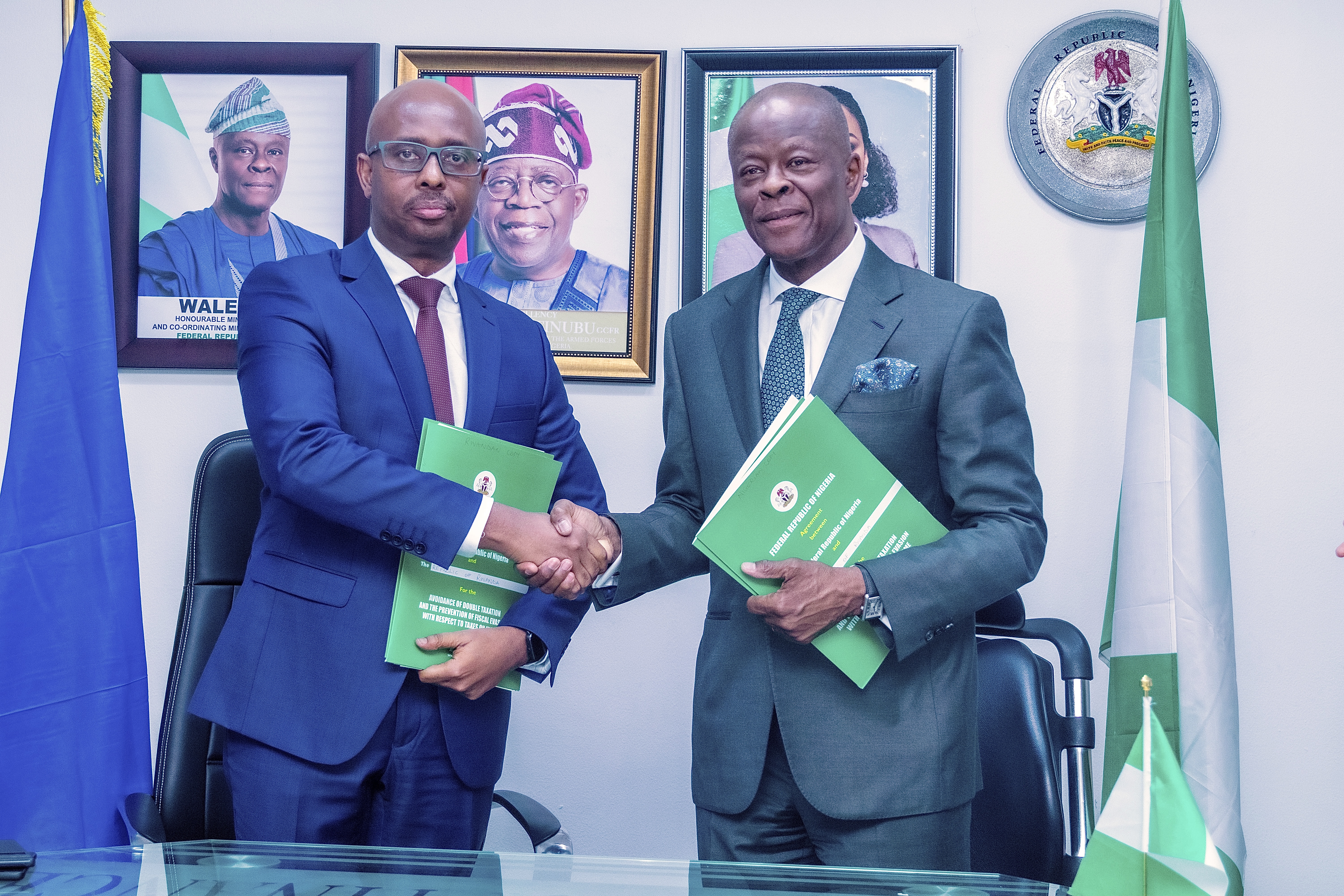
The Governments of Rwanda and Nigeria have signed an Agreement on the Avoidance of Double Taxation and the Prevention of Fiscal Evasion with respect to Taxes on Income, marking an important milestone in strengthening economic cooperation between the two countries.

The agreement was signed on June 27, 2025, during the 32nd Afreximbank Annual Meetings in Abuja, reflecting the shared commitment of both nations to deepen bilateral economic relations, promote private sector growth, and support regional integration across Africa.
The signing ceremony was presided over by Mr. Wale Edun, Nigeria’s Minister of Finance and Coordinating Minister of the Economy, and Mr. Yusuf Murangwa, Rwanda’s Minister of Finance and Economic Planning.
The treaty is designed to eliminate the risk of double taxation on the same income, one of the key barriers to cross-border trade and investment. By providing greater tax certainty, improved transparency, and simplified tax administration, the agreement aligns both countries with international standards and strengthens investor confidence.
Speaking at the signing, Minister Yusuf Murangwa described the agreement as “a testament to the strong partnership between Rwanda and Nigeria, and a critical step in creating a unified, investor-friendly Africa.” He expressed confidence that the treaty would contribute to deeper regional integration and shared prosperity across the continent.
Nigeria’s Finance Minister, Mr. Wale Edun, emphasized that the treaty represents a critical tool for promoting cross-border investment and ensuring tax certainty, noting that it complements Nigeria’s broader tax reform efforts aimed at improving the investment climate.
The agreement is expected to encourage capital flows, facilitate technology collaboration, and strengthen trade linkages between Rwanda and Nigeria in sectors such as technology, finance, agriculture, and logistics. It also supports broader continental initiatives, including the African Continental Free Trade Area (AfCFTA), which seeks to create a single African market.
Both ministers commended the technical teams from Rwanda and Nigeria whose work made the agreement possible, underscoring the importance of sustained cooperation in building a more resilient, integrated, and investor-friendly African economy.


The signing comes at a time of rapid economic transformation across the continent, as the African Continental Free Trade Area (AfCFTA) advances efforts to integrate 55 African economies into a single market. In this context, the Nigeria–Rwanda tax treaty represents a practical step toward unlocking trade, encouraging capital flows, and supporting sustainable economic growth in Africa.

Rwanda’s 32nd Liberation Anniversary Celebrated in Abuja

Visit Rwanda and Aston Villa Launch Landmark Front of Shirt Partnership

Rwanda’s mountain gorilla documentary premieres globally on Netflix
Nigeria Implements 30-Day Visa-Free Entry for Rwandan Nationals
Ambassador Moses Rugema Presents Letters of Credence to the President of the Federal Republic of Nigeria
Rwanda and Chad Sign Agreement Establishing Joint Cooperation Commission

Government of Rwanda launches Innovate Rwanda to strengthen the national innovation ecosystem

Fitch Ratings Affirms Rwanda’s ‘B+’ Credit Rating, Upgrades Outlook to Stable
